
NUS Business School Dean highlights astute business leadership as key to sustaining Vietnam’s growth momentum and strengthening its growing role in ASEAN’s economic transformation.
Southeast Asia is entering a new era of transformation. As global supply chains realign, digital economies deepen and sustainability becomes a competitive advantage, Vietnam has emerged as one of the region’s most compelling growth stories, poised to shape the next phase of ASEAN’s development.
Once anchored primarily in manufacturing and trade, Vietnam is now moving steadily towards highervalue industries, digital innovation and services. As growth accelerates, the demand for strong leadership and management capabilities is rising in tandem. Yet, a widening gap remains between the skills the market needs and currently available talent.
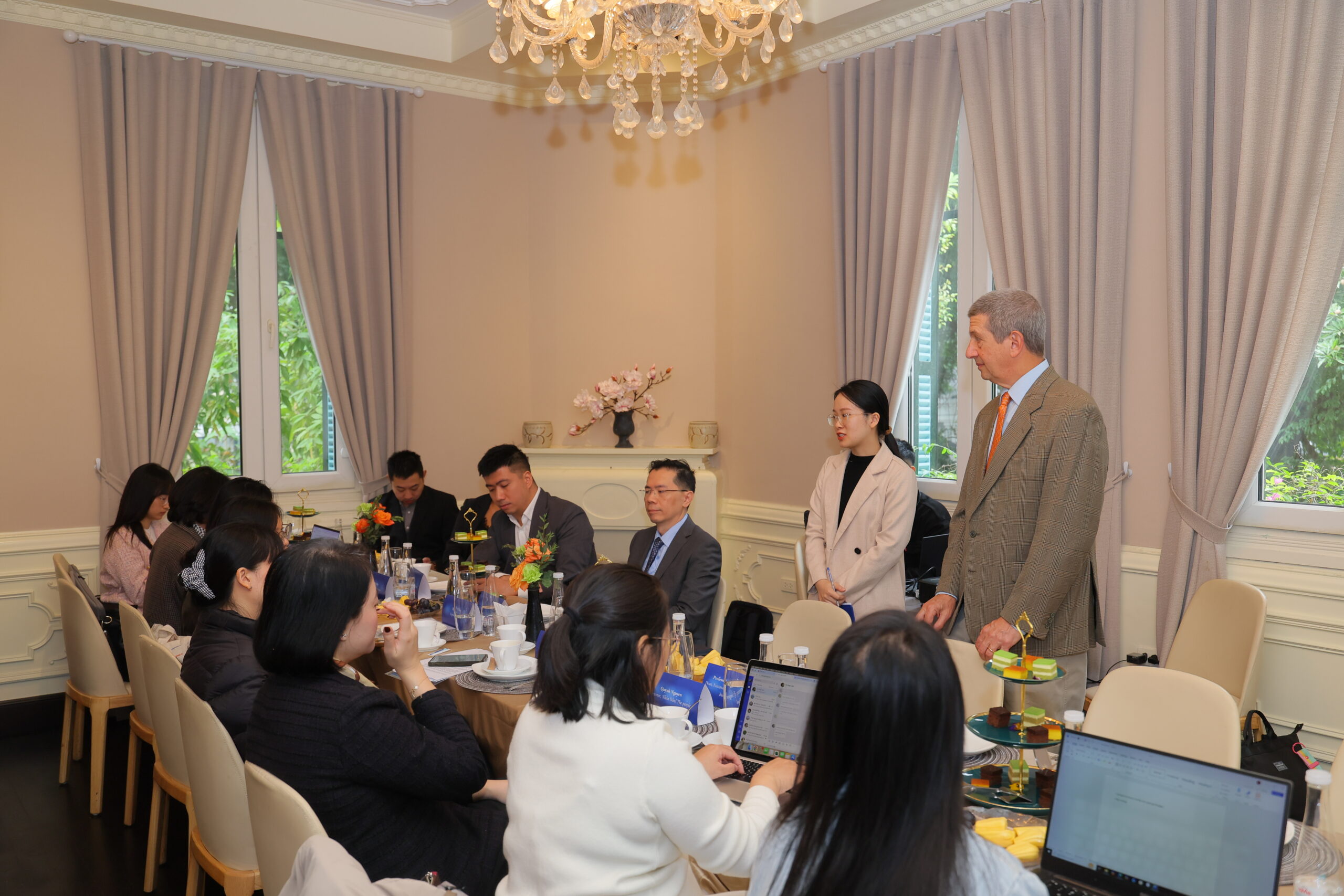
Speaking to local media during a visit to Hanoi on 15 January, Distinguished Professor Andrew K. Rose, Dean of NUS Business School, highlighted how Vietnam’s transformation reflects a broader shift across ASEAN, where economies are moving from rapid industrial expansion to more innovation and knowledgedriven growth.

To sustain this momentum, Professor Rose noted that there is an urgent need for a new generation of business leaders who can recognise regional trends, seize opportunities across borders and work effectively at the intersection of government policy and privatesector innovation.
“Vietnam’s economy is thriving, foreign investment continues to rise, and a confident middle class is reshaping domestic demand. The country is not only growing quickly but maturing as it does so. For Vietnamese organisations to succeed in this next stage, business leaders must be able to read regional trends, spot new opportunities and leverage connections across borders, while staying agile, internationally attuned and firmly rooted in local understanding for the challenges of a more competitive global environment,” said Professor Rose.
Singapore’s position at the heart of Asia’s trade and capital flows, combined with its strong reputation as a higher education hub, makes it a natural gateway for Vietnamese talent into the region.
Professor Rose also noted that majority of Vietnamese professionals who pursue NUS Business School’s MBA and executive education programmes are mid to seniorlevel business leaders seeking to step into larger regional roles, and many draw on the School’s leadership and management expertise, as well as its networks, to move into positions in consulting, technology and regional corporate headquarters.
The MSc in Finance is also a popular option among younger Vietnamese students, reflecting growing interest in deepening financial expertise to support Vietnam’s ambitions in areas such as capital markets, corporate finance and regional banking.
NUS Business School is also supporting access to education through a range of scholarships and financial aid. Vietnamese MBA candidates are eligible for various awards such as the NUS MBA ASEAN Scholarship, the NUS ADB–Japan Scholarship and other merit-based scholarships.
The School has also worked with organisations in Vietnam to build leadership capacity through executive education programmes. Since 2023, executives from Vietnamese companies have joined courses such as the Stanford–NUS Executive Programme, and the Leadership Development and Driving Strategic Innovation programmes, reflecting growing interest in leadership development that is both regionally grounded and globally informed.
Taken together, these efforts reflect a closer alignment between Vietnam’s development priorities and the School’s focus on leadership development in Asian. As Vietnam moves into its next phase of growth, NUS Business School’s programmes offer a ready platform to help bridge talent gaps and support Vietnamese organisations in realising their regional and global ambitions.